HONOURABLE SOCIETY OF THE FEZ – ANNUAL DINNER
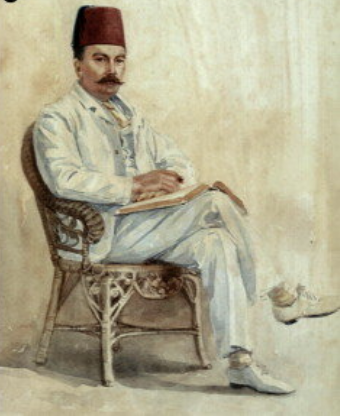
Wearing a fez (or tarboosh) is not new to Savile members. The eminent pathologist and bacteriologist, Sir Marc Armand Ruffer, a member of this club whose name appears on our war memorial, was painted proudly sporting a maroon fez during his sojourn in Alexandria in the early 20th century; and throughout the 19th-century smoking hats (which evolved from the fez), would have been a common sight in our bar and snooker room.
Founded during a visit to Cairo by ‘pashas’ JP Loveland, Tom McDavid and Hugh Fraser to revive the wearing of this once-celebrated hat, the Honourable Society of the Fez would like to welcome all Savilians to join us for our second annual feztivities on the evening of 5 September. Club officers Stephan von Schilling and John Higgins, along with ‘dervishes’ Sam Jewison and Sam Casey, will be present to ensure that no glass runs dry and that feziquette is maintained throughout. Nicola Bodano will be able to show off the 100-year-old fez owned by his great-grandfather, Tom McClintock may enlighten you on what he believes wearing a fez signifies, and Peter Allinson will demonstrate how the fez can become the epitome of elegance.
Over the past year, the Honourable Society of the Fez has imported no less than 42 fezzes from a dusty 150-year-old shop in the heart of Cairo’s teaming Khan el Khalili bazaar, thereby supporting a struggling cottage industry and overnight became the single largest client for the last fez maker in Egypt! His beautifully crafted hand-made hats come with an Egyptian court-style tassel and are shaped from felt on heavy brass presses that bear the tughra of one of the last Ottoman sultans. According to the shop owner, in years gone by: “The well-dressed gentleman would keep a fez on a stand beside the front door of his home and six others in his bedroom.” Advice that all sartorially aware members of the society should take seriously.
The origins of the hat are in dispute. Some claim that it came from ancient Greece, others that it hails from the Balkans; however, there is no doubt that broad acceptance of the fez stems from the Ottoman Empire. While it is acknowledged that wearing this flower-pot-shaped hat is now considered politically incorrect across much of the Middle East as it is viewed as a symbol of oppression, it must also be remembered that in Morocco, the fez is a symbol of nationalism. It was worn historically as a protest against the French occupation and is now associated with the Moroccan royal court. Both the King of Morocco and the Sultan of Brunei wear fezzes to this day.
Note on fez orders: Should any member wish to order a hat from Cairo’s last fez maker, email Hugh Fraser at hughpfraser@gmail.com with your size in cm. The best quality fezzes cost about £25 each. Low-quality fezzes cost £5.
MEMBERS ONLY EVENT
DRESS CODE: “Black Tie and Fez”
Special After Dinner Cocktail “THE SWOONING PASHA” will be available from the Bar @ £9