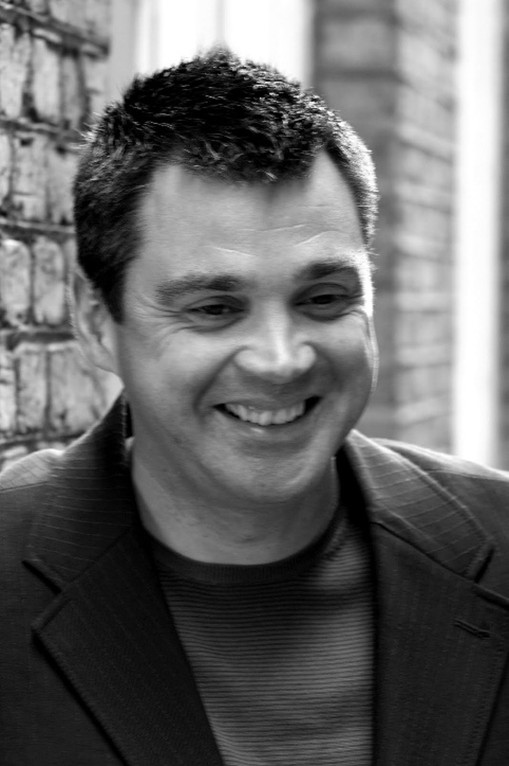
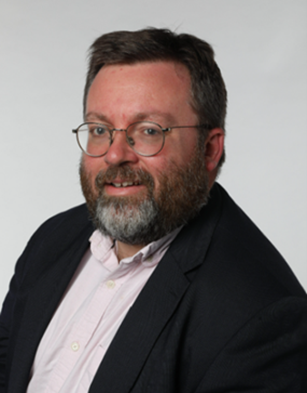
SCIENCE TALK. INCREDIBLE JOURNEYS: EXPLORING THE SCIENCE OF ANIMAL NAVIGATION – DAVID BARRIE TALK. CHAIRED BY SAVILIAN CLIFF COLLIS.

David will discuss the many different ways in which animals, large and small, navigate their worlds, and reveal the many exciting discoveries that have been made by scientists over the last half century – as well as the mysteries that remain to be solved.  His subjects will range from migratory birds that cross oceans to insects that travel a few hundred meters – even bacteria will get a mention.  David will explain the variety of senses on which our fellow creatures rely, some of which are familiar to us, while others may seem decidedly strange. He will also describe the extraordinary way finding skills that are still employed by some indigenous peoples, as well as the fascinating discoveries made by neuroscientists who are uncovering the brain circuitry that makes navigation possible. Finally, he will raise important questions about our increasing reliance on electronic navigation aids and the price we may be paying for it.

After studying experimental psychology and philosophy at Oxford University, David Barrie joined the British Diplomatic Service. After leaving the government service, he worked in the arts – first as director of the UK-wide Japan Festival 1991, and then as director of the visual arts charity, the Art Fund.  David is a Fellow of the Royal Institute of Navigation. He has made many long voyages under sail and is an experienced navigator.

David’s first book, Sextant,was shortlisted for the Mountbatten Literary Award and won the Royal Institute of Navigation’s Certificate of Achievement. His second book, Incredible Journeys (Supernavigators in North America) won the Gold Nautilus Book Award and was chosen as The Sunday Times Nature Book of the Year.  An illustrated children’s version appeared in the US earlier this year. David was a consultant on the National Geographic channel series, Incredible Animal Journeys (2023).  Instagram @authorbarrie

Cliff Collis has a wide background in science with a doctorate in fish neurophysiology and researching in and teaching physiology and biochemistry at UCL and Kings College London. He also worked as a communication specialist doing knowledge/issue management in Roche drug development and finally was the professional registers and training manager at the Royal Society of Biology. He has always been passionate about promoting interest and understanding in science and was very pleased to be able to continue to do this in Savile Science, where he has organised talks on such diverse topics as Mars rovers, the psychological benefits of music, microplastic pollution and cyber security. Several members have given talks as well, and members are invited to offer suitable talks or suggest speakers.

THE SUBLIME SOCIETY OF BEEF STEAKS: THE STORY OF AN ECCENTRIC PRIVATE MEMBERS CLUB, 1735-1867. JOINT EVENT FOR SAVILE AND BEEFSTEAK CLUB MEMBERS


The evening will be chaired by Gavin Henderson, a member of both the Savile and the Beefsteak.

Savilian Jeremy Barlow will present an illustrated talk

The Sublime Society of Beef Steaks grew from informal lunches of grilled steaks, held by artist William Hogarth, theatre manager John Rich, his scenery painter George Lambert and a few friends; the venue was the painting room in Rich’s newly built Covent Garden Theatre (site of the Royal Opera House today). The Society was formalised in 1735, with the motto ‘Beef and Liberty’ and a gridiron as its emblem. Odd rituals developed that satirised Masonic practices, while the menu expanded to comprise ‘grilled beefsteaks, baked potatoes, spanish onions cold and fried, beet root, and chopped eschalot (shallots). Toasted cheese ended the repast. Porter (in pewter), port wine, punch and whisky toddy were the drinks’.

Chef Michael will pay homage to this bill of fare, perhaps not too closely. Whisky toddy will be available in the bar before the talk, and port will conclude the meal, along with the Sublime Society’s anthem ‘The Roast Beef of Old England’.

Hogarth’s print ‘O the Roast Beef of Old England’ (1749) –

also known as ‘The Gate of Calais’ – contrasts a weighty joint

of English beef with, just to the right, an emaciated French soldier spilling his meagre bowl of soup in awe.  Far left, we can just see Hogarth himself sketching the scene. The hand on his shoulder and the tip of a halberd above his head belong to

a gendarme, who is arresting Hogarth on suspicion of spying (this actually happened).

Jeremy Barlow’s article ‘William Hogarth, George Lambert, John Rich and The Sublime Society of Beef Steaks’ appeared recently in The British Art Journal. He has written extensively on Hogarth, Rich, and on Rich’s most famous production, The Beggar’s Opera. Books include The Enraged Musician: Hogarth’s Musical Imagery (Routledge) and The Stage’s Glory: John Rich (1692-1761), co-edited with Berta Joncus (University of Delaware). His recording of The Beggar’s Opera (Hyperion) won an Edison Award.

NUMBERS ARE LIMITED TO 40 SAVILIANS

MEMBERS ONLY EVENT

SAVILIANS ON SAVILIANS: MICHAEL BENTLEY ON MRD FOOT

M. R. D. Foot – Michael Foot (1919-2012), not to be confused with long hair and monkey jackets, was the Savilian son of a Savilian.  The family had a strong military streak which helps explain Michael’s distinguished war service and his later involvement with the history of the Special Operations Executive and the often-secret resistance to the Third Reich in Britain, France and the Netherlands.  Although he was a member of the Paras during the war and dropped behind enemy lines, he was principally an historian and his postwar years saw him editing the earlier volumes of the Gladstone Diaries – MR Gladstone to you: he was touchy about that – and then writing a number of volumes of Official History for which he and his books needed FO clearance.  When he wanted to arrange a confidential conversation on such matters, he booked a side table at the Savile.  Nowhere safer, he used to say.

His son-in-law recalls him in this short talk and highlights his personality and achievements.  He will also recall Michael’s fastidious manners and skill in conversation and conviviality: the things at which Savilians excel.

Michael Bentley – often called ‘Foot’ by Savilians because of my marriage to Sarah Foot, Dean of Christ Church, Oxford,  I actually knew her father before I knew her.  We both advised on a series of micro-form publications (remember those?) run by another friend, Charles Chadwyck-Healey, whose firm you may recall but who misguidedly got himself elected to Brooks’s rather than Brook St.  When I ‘joined the family’, as Michael liked to say, I got to know him well and indeed he proposed me for the Savile in 2001 when I was a Professor at St Andrews and when a berth in London would be immensely helpful on my visits. Typically, he thought of that and acted on it. I also am an academic and, like him, I write history books: not about war and derring-do but about the history of British politicians who rarely do any derring; but also about historians across time and space and the way they make pictures of the past from particular standpoints and prejudices.  Michael’s only failing was that he did not drink enough, which his why he only made it to 92, so, as you see, I do what I can to make up lost ground. It will be a privilege to recall Michael’s eventful life with affection and to rekindle affection in those fortunate to have known this charming and popular Savilian.

THE ART AND LIFE OF SIR WILLIAM NICHOLSON – SIMON MARTIN TALK. CHAIRED BY SAVILIAN JOHN GILL

To coincide with the Savile Club’s loan of a painting by its former member Sir William Nicholson to the major exhibition of his work at Pallant House Gallery in Chichester, its Director Simon Martin will present an illustrated lecture on the artist’s remarkable life and work. It will explore the artist’s extraordinary creativity in different media from bold ‘Beggarstaff’ poster designs and iconic woodcut prints (several of which are displayed in the Club) to dazzling still lifes, evocative views of the Downland landscape and insightful portraits. 

Simon Martin has written numerous books on British art and artists, including on Glyn Philpot, John Piper, Eduardo Paolozzi, John Minton and thematic studies such as ‘Drawn to Nature: Gilbert White and the Artists’ (on which he spoke at the Savile Club in 2024). He is the co-editor of a new monograph on Nicholson, published to coincide with the exhibition. 

John Gill chairs the Savile Club Art Committee. Now retired, he has spent four decades working with visual artists as director and curator in galleries and arts agencies in the public sector.  He was founding chairman and board member of several arts charities across the UK, and author of books and articles about arts and culture. In 2015/16 he held a Visiting Fellowship at Harvard where he continued his ongoing research into theatrical portraiture in the 18th and 19th centuries. Away from artists’ studios, he is generally to be found in concert halls and opera houses indulging his passion for music.

APERITIF CONCERT

Cherubim’s own ‘u-Tuba’ Dafydd Owen in a half hour of musical comedy showing unexpected versatility of the tuba, and ending with a sing-along of Gilbert & Sullivan and the Hippotamus Song (by Savilian Michæl Flanders) accompanied by Michael Maxwell Steer.

Aperitif Concert videothèque: https://www.youtube.com/@savileaperitif

CANDIDATES DINNER     

Proposers and their Candidates are invited to attend a dinner hosted by the Club at which several members of the General Committee will be present. This will give candidates the opportunity of meeting both members of the Committee and other Savilians.

(Proposers and their Candidates, General Committee Members)

SIMONE ALESSANDRO TAVONI CONCERT


Simone Alessandro Tavoni is an acclaimed Italian pianist who has performed internationally at prestigious venues including Wigmore Hall, Royal Festival Hall, and Palau de la Música Catalana. A Parklane Group Artist and Keyboard Charitable Trust Artist, he received a full scholarship to the Aspen Music Festival, studying with Fabio Bidini.

He holds degrees from the Royal College of Music, Trinity Laban Conservatoire, Liszt Academy, and Hochschule für Musik Stuttgart. Simone was selected for the BBC Pathway Scheme and is supported by HSH Dr. Donatus Prince of Hohenzollern. 

His programme commemorates two composers with vividly contrasting styles, born 150 and 160 years ago respectively: the Spanish Manuel de Falla and the French Erik Satie. To conclude, we hear Chopin’s monumental Third Sonata: an unmissable evening.

PROGRAMME:

Manuel de Falla Four Spanish Pieces
Erik Satie Gnossiennes Nos. 1, 3
Erik Satie Gymnopedie No.1 Ogives 1-2-3

Erik Satie: Ogives 1-2-3

Francisca Gonzaga: Bionne, Lua Branca 

Frédéric Chopin: Sonata No. 3 in B Minor, Op. 58