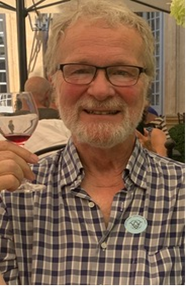
A selection of three Red Wines from the Club cellar will be paired to the smoking evolution of a cigar chosen from our Club Humidor. The cigar featured for this occasion is the Partagas D4.
Three tailored food pairings will accompany each stage of the cigar’s evolution.
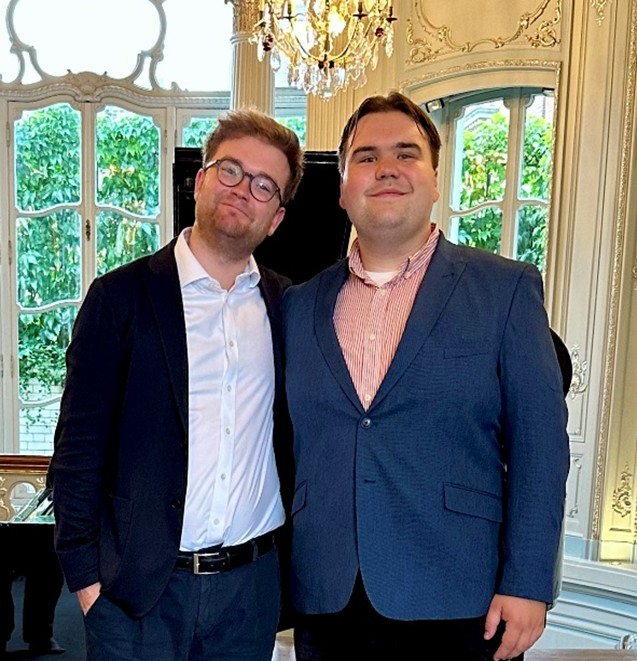
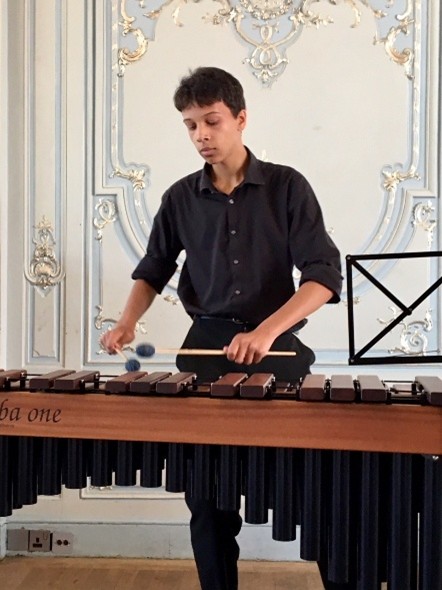
Featuring Vaughan Williams’ ‘The House of Life’ (an early songcycle to verse by Rosetti), Dowland, Handel, Savilians Stanford /Elgar /Quilter & the premiere of Michæl Maxwell Steer setting of three pœms by Robert Bridges.
Archie Inns is a Scottish tenor studying for a Masters at the RCM where he is taught by Miranda Wright and Nicky Spence. He made his debut at the Oxford International Song Festival in 2024 alongside James Gilchrist and has performed many solo recital with his collaborator Alfred Fardell and won many funding awards. A choral scholar at Oxford, Archie read theology, but demand for his unique voice was so strong that he abandoned a career in law and has subsequently sung with many major choirs including the BBC Singers and The 16 at the Proms, as well as all the London cathedral choirs.
Alfred Fardell is a pianist based in London. He holds the Michael Gilsenan Award at the Royal Academy of Music where he studies Ensemble Piano under James Baillieu and Anna Tilbrook. Before joining the Academy, Alfred gained a First Class degree in Music from St Peter’s College, Oxford. Competition success has included the Dorothy Richardson English Song Prize, Rex Stephens prize and the Marjorie Thomas Art of Song Prize. Alfred’s studies are supported by the Countess of Munster Musical Trust.
With members from the Athenaeum, Oriental, Travellers, Oxford & Cambridge, Naval & Military, Hurlingham, Carlton, Brook’s ; RAC, Buck’s and Reform Clubs.
£57 Including drinks & canapes, 2 course dinner with wine
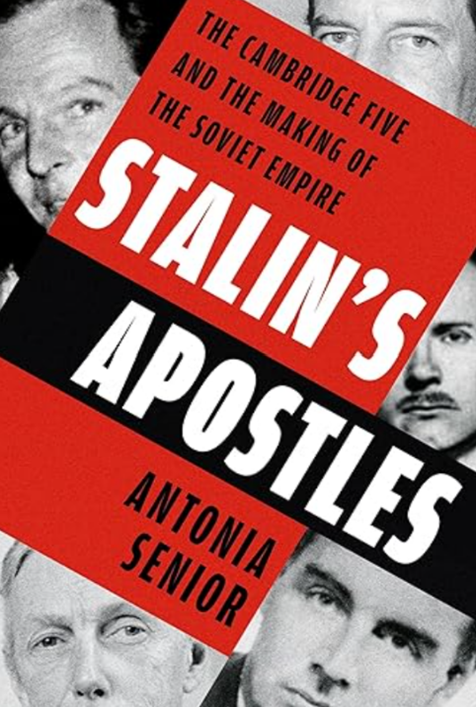
Stalin’s Apostles is a radical new look at the way five people allowed their obsession with Communist ideology to overshadow any sense of morality or decency – or loyalty to their country. Why did these gilded charming men, blessed with brains, and beauty and opportunities, choose to betray their country?
Using recently declassified files, Stalin’s Apostles explores as never before the treachery of Donald Maclean, Guy Burgess, Kim Philby, John Cairncross and Keeper of the Queen’s Pictures Anthony Blunt, all radicalised while at Cambridge University in the 1930s. Their clandestine supply of British and US intelligence material gave Stalin an inside track on US and British decision-making until the implosion of the spy-ring in May 1951. There was barely a secret, barely a decision made, that Stalin did not know about, thanks to his Cambridge spies, and his networks in the United States. The Five became tools in Stalin’s imperial scheme, responsible directly and indirectly for the death of thousands of men and women fighting against Soviet domination.
Shielded for so long by the British Establishment, four of the five were never prosecuted for their crimes. As STALIN’S APOSTLES reveals, they were exposed as much by their own incompetence as by forensic investigation by the CIA, MI5 or MI6. And in time another dictator emerged as ruthless as Stalin, but with an even greater desire to establish a Russian Empire that would threaten Western democracy. The legacy of the Cambridge Five is not only in the graveyards of eastern Europe, but at the heart of Putin’s Kremlin.
‘Meticulously researched, this is a fascinating analysis.’ Nigel West, author of A Matter of Trust: MI5, 1945-72
‘Beautifully written and utterly compelling, Stalin’s Apostles is a brilliant reassessment of the Cambridge Five whose naive faith in communism is tellingly juxtaposed with the brutal reality of Stalin’s rule. Their betrayals had serious consequences for the West, as Senior makes clear, yet they lived out their days in Soviet exile with few regrets. A cautionary tale by a rising star of non-fiction.‘Saul David, author of Tunisgrad
‘Understanding why the Cambridge spies really betrayed their country has eluded historians for decades. Senior’s new book is impressive in its scope of ground-breaking research and depth of historical context to unpack the motivations of these enigmatic men. A powerful narrative.’ Dr Helen Fry, author of The White Lady A brilliant book. Deep research and dazzling writing make Stalin’s Apostles an appallingly entertaining read. A definitive work on one of the 20th century’s most treacherous conspiracies. Tim Weiner, author of Legacy of Ashes and The Mission.
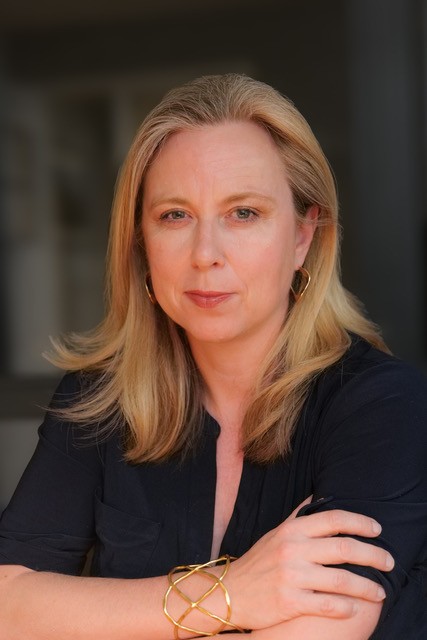
Antonia Senior is a novelist, critic and journalist. She studied history at Cambridge University and has retained a lifelong interest in the Soviet Union and intelligence history. Antonia has published three novels. Stalin’s Apostles is her first work of non-fiction. Antonia has spent more than a decade as the historical fiction reviewer for The Times. She spent thirteen years on staff at The Times in various roles, including acting Business Editor and leader writer.
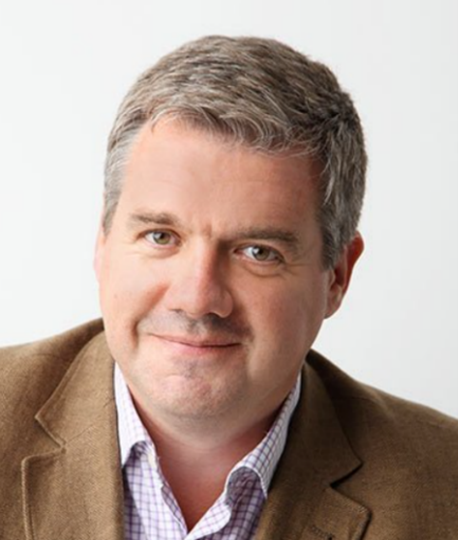
Roger Moorhouse is a specialist in modern German and Polish history, particularly the Third Reich and the Second World War. He has written a number of books in this capacity, including Killing Hitler (2006), Berlin at War (2010), The Devils’ Alliance (2014) and the critically acclaimed First to Fight (2019), which was awarded the Polish Foreign Ministry History Prize in 2020. Roger’s books have appeared in
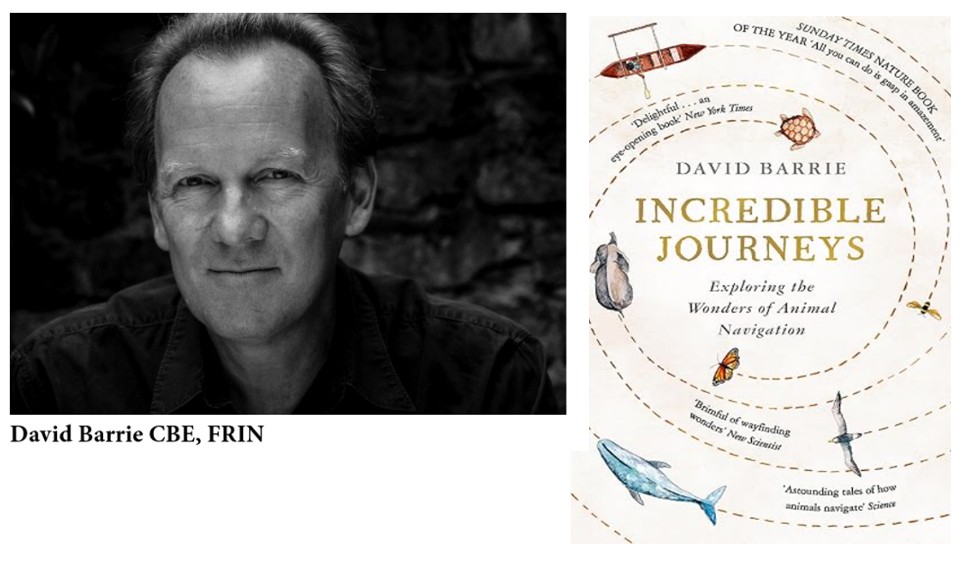
David will discuss the many different ways in which animals, large and small, navigate their worlds, and reveal the many exciting discoveries that have been made by scientists over the last half century – as well as the mysteries that remain to be solved. His subjects will range from migratory birds that cross oceans to insects that travel a few hundred meters – even bacteria will get a mention. David will explain the variety of senses on which our fellow creatures rely, some of which are familiar to us, while others may seem decidedly strange. He will also describe the extraordinary way finding skills that are still employed by some indigenous peoples, as well as the fascinating discoveries made by neuroscientists who are uncovering the brain circuitry that makes navigation possible. Finally, he will raise important questions about our increasing reliance on electronic navigation aids and the price we may be paying for it.
After studying experimental psychology and philosophy at Oxford University, David Barrie joined the British Diplomatic Service. After leaving the government service, he worked in the arts – first as director of the UK-wide Japan Festival 1991, and then as director of the visual arts charity, the Art Fund. David is a Fellow of the Royal Institute of Navigation. He has made many long voyages under sail and is an experienced navigator.
David’s first book, Sextant,was shortlisted for the Mountbatten Literary Award and won the Royal Institute of Navigation’s Certificate of Achievement. His second book, Incredible Journeys (Supernavigators in North America) won the Gold Nautilus Book Award and was chosen as The Sunday Times Nature Book of the Year. An illustrated children’s version appeared in the US earlier this year. David was a consultant on the National Geographic channel series, Incredible Animal Journeys (2023). Instagram @authorbarrie
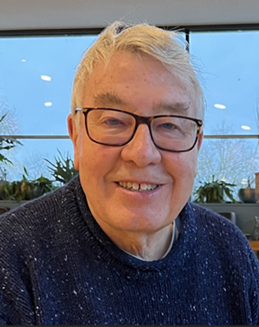
Cliff Collis has a wide background in science with a doctorate in fish neurophysiology and researching in and teaching physiology and biochemistry at UCL and Kings College London. He also worked as a communication specialist doing knowledge/issue management in Roche drug development and finally was the professional registers and training manager at the Royal Society of Biology. He has always been passionate about promoting interest and understanding in science and was very pleased to be able to continue to do this in Savile Science, where he has organised talks on such diverse topics as Mars rovers, the psychological benefits of music, microplastic pollution and cyber security. Several members have given talks as well, and members are invited to offer suitable talks or suggest speakers.
The evening will be chaired by Gavin Henderson, a member of both the Savile and the Beefsteak.
Savilian Jeremy Barlow will present an illustrated talk
The Sublime Society of Beef Steaks grew from informal lunches of grilled steaks, held by artist William Hogarth, theatre manager John Rich, his scenery painter George Lambert and a few friends; the venue was the painting room in Rich’s newly built Covent Garden Theatre (site of the Royal Opera House today). The Society was formalised in 1735, with the motto ‘Beef and Liberty’ and a gridiron as its emblem. Odd rituals developed that satirised Masonic practices, while the menu expanded to comprise ‘grilled beefsteaks, baked potatoes, spanish onions cold and fried, beet root, and chopped eschalot (shallots). Toasted cheese ended the repast. Porter (in pewter), port wine, punch and whisky toddy were the drinks’.
Chef Michael will pay homage to this bill of fare, perhaps not too closely. Whisky toddy will be available in the bar before the talk, and port will conclude the meal, along with the Sublime Society’s anthem ‘The Roast Beef of Old England’.
Hogarth’s print ‘O the Roast Beef of Old England’ (1749) –
also known as ‘The Gate of Calais’ – contrasts a weighty joint
of English beef with, just to the right, an emaciated French soldier spilling his meagre bowl of soup in awe. Far left, we can just see Hogarth himself sketching the scene. The hand on his shoulder and the tip of a halberd above his head belong to
a gendarme, who is arresting Hogarth on suspicion of spying (this actually happened).
Jeremy Barlow’s article ‘William Hogarth, George Lambert, John Rich and The Sublime Society of Beef Steaks’ appeared recently in TheBritish Art Journal. He has written extensively on Hogarth, Rich, and on Rich’s most famous production, The Beggar’s Opera. Books include The Enraged Musician: Hogarth’s Musical Imagery (Routledge) and The Stage’s Glory: John Rich (1692-1761), co-edited with Berta Joncus (University of Delaware). His recording of The Beggar’s Opera (Hyperion) won an Edison Award.
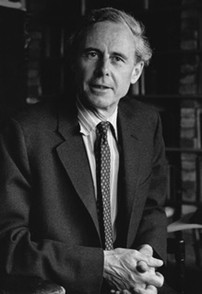
M. R. D. Foot – Michael Foot (1919-2012), not to be confused with long hair and monkey jackets, was the Savilian son of a Savilian. The family had a strong military streak which helps explain Michael’s distinguished war service and his later involvement with the history of the Special Operations Executive and the often-secret resistance to the Third Reich in Britain, France and the Netherlands. Although he was a member of the Paras during the war and dropped behind enemy lines, he was principally an historian and his postwar years saw him editing the earlier volumes of the Gladstone Diaries – MR Gladstone to you: he was touchy about that – and then writing a number of volumes of Official History for which he and his books needed FO clearance. When he wanted to arrange a confidential conversation on such matters, he booked a side table at the Savile. Nowhere safer, he used to say.
His son-in-law recalls him in this short talk and highlights his personality and achievements. He will also recall Michael’s fastidious manners and skill in conversation and conviviality: the things at which Savilians excel.
Michael Bentley – often called ‘Foot’ by Savilians because of my marriage to Sarah Foot, Dean of Christ Church, Oxford, I actually knew her father before I knew her. We both advised on a series of micro-form publications (remember those?) run by another friend, Charles Chadwyck-Healey, whose firm you may recall but who misguidedly got himself elected to Brooks’s rather than Brook St. When I ‘joined the family’, as Michael liked to say, I got to know him well and indeed he proposed me for the Savile in 2001 when I was a Professor at St Andrews and when a berth in London would be immensely helpful on my visits. Typically, he thought of that and acted on it. I also am an academic and, like him, I write history books: not about war and derring-do but about the history of British politicians who rarely do any derring; but also about historians across time and space and the way they make pictures of the past from particular standpoints and prejudices. Michael’s only failing was that he did not drink enough, which his why he only made it to 92, so, as you see, I do what I can to make up lost ground. It will be a privilege to recall Michael’s eventful life with affection and to rekindle affection in those fortunate to have known this charming and popular Savilian.